The Art of Pattachitra: How an Ancient Tradition Survived Into the Modern Age
The Art of Pattachitra: How an Ancient Tradition Survived Into the Modern Age
In an age of smartphones, digital artwork and artificial intelligence, it is easy to assume that traditional art forms belong to the past.
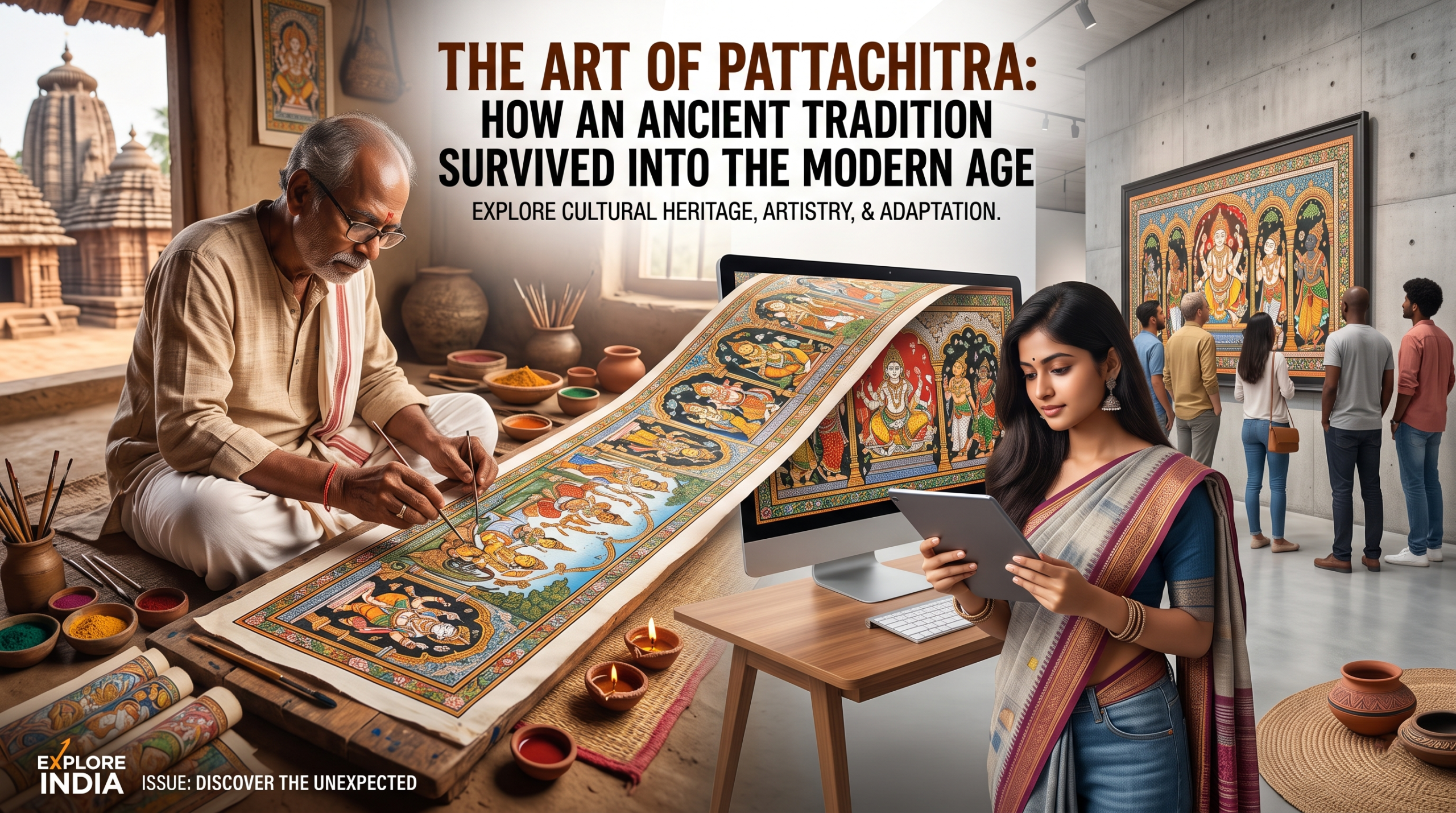
But in a small village near Puri, generations of artists continue to sit with brushes in hand, carefully painting stories that have been passed down for centuries.
This is Pattachitra, one of Odisha’s most distinctive traditional art forms.
The paintings are instantly recognisable for their detailed lines, strong colours, decorative borders and stories drawn from mythology and religious traditions. But Pattachitra is more than something beautiful to hang on a wall.
It is a living tradition.
And perhaps the most interesting part of its story is not how old it is, but how it has managed to survive in a rapidly changing world.
What Is Pattachitra?
The word Pattachitra comes from two Sanskrit-derived words: patta, meaning cloth or canvas, and chitra, meaning picture or painting.
Traditionally, artists prepare a specially treated cloth surface before beginning the painting. Natural materials and traditional techniques have historically played an important role in preparing colours and the painting surface.
The finished work is usually characterised by precise outlines, intricate details and decorative compositions.
Unlike some forms of modern painting, Pattachitra traditionally follows a distinctive visual language. Artists work within established conventions while still bringing their own skill and interpretation to each piece.
Raghurajpur: A Village Where Art Is Part of Daily Life
When people talk about Pattachitra in Odisha, Raghurajpur is often the first place that comes to mind.
Located in Puri district, the heritage crafts village is known for its community of traditional artists.
What makes Raghurajpur special is the way art is integrated into everyday life. Visitors can see paintings being created in family workshops and speak with artisans about their craft.
The village does not feel like a conventional art gallery.
The homes themselves become places of creativity.
For visitors, this provides a much more personal understanding of Pattachitra than simply seeing finished paintings in a shop.
Stories Painted on Cloth
One of the most fascinating aspects of Pattachitra is the range of stories it represents.
Many traditional works depict episodes connected with Lord Jagannath, Krishna, Ramayana and other Hindu religious traditions.
The paintings often contain multiple characters and detailed scenes, requiring considerable patience and precision from the artist.
A Pattachitra painting can therefore function almost like a visual storybook.
Instead of reading a story from a page, the viewer follows it through characters, gestures, symbols and carefully arranged scenes.
The Importance of Traditional Technique
Creating a traditional Pattachitra painting is not simply a matter of picking up a brush and painting on cloth.
The preparation of the surface is itself an important part of the process.
Traditionally prepared cloth is coated and treated to create a smooth painting surface. Artists then draw the composition, add colours and carefully work on the details.
The characteristic borders are also an important part of the visual identity of the art.
The precision required means that a finished painting can represent many hours—or considerably longer—of concentrated work.
That patience is one of the qualities that makes traditional Pattachitra so different from mass-produced decorative artwork.
Natural Colours and Traditional Knowledge
Traditional Pattachitra is also interesting because of the knowledge involved in making colours.
Historically, artists used materials derived from natural sources to create different shades. Mineral and plant-based materials, along with other traditional ingredients, were used depending on the colour required.
This knowledge was not simply written down in a textbook.
Much of it was transmitted through generations of artisans.
The ability to prepare materials, understand their properties and use them effectively is therefore part of the artistic heritage itself.
How Did Pattachitra Survive?
This is perhaps the most interesting question.
Traditional art forms often struggle when modern lifestyles change and younger generations move towards other careers.
Pattachitra has survived partly because it remained connected to Odisha’s cultural and religious traditions.
But tradition alone isn’t enough.
Artists and artisan communities have also adapted.
Pattachitra is now available in different sizes and formats, and its visual style has influenced a variety of contemporary products and artworks.
The challenge is to adapt without losing the identity of the original tradition.
From Temple Traditions to Modern Homes
Pattachitra was historically closely associated with religious and temple traditions, particularly the culture surrounding Lord Jagannath.
Today, its audience is much wider.
A Pattachitra painting may now be purchased by someone looking for traditional artwork for their home, by a collector interested in Indian folk art or by a traveller wanting a meaningful souvenir from Odisha.
This broader market has helped create new opportunities for artisans.
At the same time, it raises an important question: How much can an art form change before it stops being traditional?
There is no simple answer.
For many artists, adapting to contemporary demand is not about abandoning tradition. It is about ensuring that the tradition continues to provide a livelihood for the next generation.
Young Artists and the Future of Pattachitra
Perhaps the biggest reason for optimism is that Pattachitra is not only being practised by older generations.
Young artists from traditional families are continuing to learn the techniques.
Some are also experimenting with new subjects, formats and applications while retaining elements of the traditional style.
This balance between inheritance and experimentation could determine the future of Pattachitra.
If the art becomes frozen in the past, it may struggle to remain economically sustainable.
If it changes too dramatically, however, its traditional identity could gradually disappear.
The future will likely depend on finding the middle ground.
Why Tourists Should Visit the Artists, Not Just Buy the Painting
If you are travelling through Odisha and interested in Pattachitra, visiting an artisan community can make the experience much more meaningful.
Instead of simply purchasing a painting from a shop, take time to understand how it was made.
Ask about the story depicted in the artwork.
Ask how long it took to complete.
Learn about the materials.
And, where possible, purchase directly from the artist or a trusted artisan organisation.
A traditional painting becomes much more valuable as a cultural experience when you know the story and human effort behind it.
Keeping the Tradition Alive
Preserving Pattachitra isn’t only about protecting an old painting style.
It means protecting an entire ecosystem of knowledge—drawing techniques, colour preparation, storytelling, religious traditions, craftsmanship and the livelihoods of artisan families.
Technology and modern markets can actually help if used responsibly.
Online platforms can allow artists to reach customers outside Odisha. Social media can introduce younger audiences to traditional art. Tourism can provide another source of income.
But the people creating the art must remain at the centre of that process.
More Than a Painting
Pattachitra has survived because it has never been merely a painting technique.
It is a connection between generations.
A child learning to draw from a parent or grandparent is not simply learning how to make patterns. They are learning stories, symbols, discipline and a way of seeing the world.
That is why Pattachitra remains relevant even in the digital age.
The tools may change.
The audience may change.
The marketplace may change.
But as long as artists continue to pick up their brushes and tell these stories on cloth, the tradition remains alive.
And perhaps that is the greatest achievement of Pattachitra—not that it has survived unchanged, but that it has survived while continuing to evolve.